
I remember teaching cellular respiration one year when a student looked at me and said, “Ms., this is like Hogwarts or something—with all these spell words you keep using!” The concept was tough to grasp, and the vocabulary felt like a foreign language. Scientific topics like these can be overwhelming for students, both in complexity and terminology. That’s why it’s essential to make them more accessible and engaging. In this post, I’ll share practical strategies to help you introduce and reinforce challenging concepts in a way that truly connects with your students.
Making Learning Meaningful First
First things first—you need to give students the why. They need a reason to care about what they’re learning. This could be an engaging scenario, a real-world connection, or anything that sparks their interest in the material. Once students have a reason or personal connection, everything gets easier. They start buying into the content and are more motivated to understand what you’re teaching.
I like to connect my lessons to careers they might pursue or use fun, interesting phenomena to grab their attention. One of my favorite examples is when I teach photosynthesis and cellular respiration—I have students create bottle biomes. We build them together and watch them thrive throughout the unit! It’s a powerful teaching tool and something they’re excited to check in on every day.
Break It Down Into Manageable Chunks
Once students are hooked, interested, and you’ve started teaching, it’s time to break down complex topics into smaller, more manageable chunks. Students can learn bits and pieces first, then connect everything together once they’ve grasped the individual components. Breaking big concepts into digestible parts helps prevent students from feeling overwhelmed. Some topics are naturally easier to chunk, but even something like atomic structure can be taught in smaller steps—focusing on one part of the atom at a time.
As you’re breaking things down, make sure you’re explicitly teaching vocabulary along the way. In science, so much of understanding the content comes down to knowing the vocabulary, which can often feel foreign or intimidating to students. I embed vocabulary instruction throughout the entire unit, adding new terms each time I introduce a new chunk of material. From Do Nows to games to exit tickets, I’m constantly reinforcing the vocabulary students are expected to learn.
Make the Invisible Visible
Science concepts often take place on a microscopic scale—think atoms, cells, and chemical processes—which can make them incredibly hard for students to grasp. These abstract ideas feel vague and out of reach without something concrete to anchor their understanding. That’s where visuals, models, and movement come in. They help bring big concepts down to a level students can connect with.
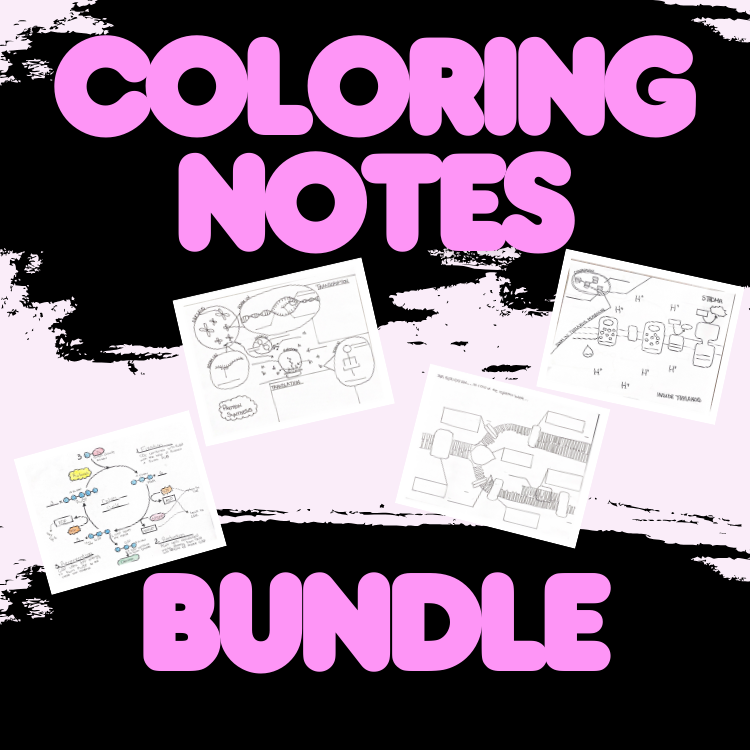
Visuals and models are especially helpful for processes that are way outside of what most teenagers can easily picture—like DNA replication or chemical bonding. When students are being hit with heavy vocabulary and abstract processes at the same time, it can be overwhelming. Giving them a model or visual they can refer to really supports their comprehension. One tool I love using is color or doodle notes. These allow students to interact with the material and vocabulary in a fun, approachable way—and they make great reference tools too! I have lots of these available in my TpT store if you’re looking to try them out in your own classroom.
Learning Through Doing Science
But after a while, visuals and models can only go so far. Students need to interact with the content. One of the best things about teaching science is the ability to use labs, activities, and games to immerse students in hands-on learning. Labs are a powerful teaching tool—not only do they help students apply what they’ve learned, but they also build practical skills that will serve them in future science classes or careers.
Labs can take many forms: simple demos to spark interest, exploration stations where students observe and draw conclusions (I love doing this with types of chemical reactions!), or full experiments where they apply concepts they’ve learned in a new context. Activities and games work in a similar way—they get students thinking, moving, and engaging with the content in meaningful ways. These tools aren’t just fun—they’re essential for deep understanding.
Chunk and Check Understanding
As I mentioned earlier, reviewing vocabulary and continually building on it is so important. The more often students revisit key terms and ideas, the more natural and secondhand the material becomes. My favorite way to do this is by using chalk markers on my lab benches (you can grab them on Amazon—they wipe off easily with water or spray). I give students the chunk I want them to focus on (notice I didn’t say the whole process—I teach in chunks and review in chunks), and have them diagram it out with a partner directly on the table without using notes.
Next, they take out their notes, compare, and add in anything they missed. Then, we add the next chunk and continue the process until their table holds the full diagram or explanation. It’s an engaging, hands-on review strategy that my students love! I even reserve one specific color just for myself so I can write feedback or positive notes directly on their desks as they work.
Of course, there are lots of other ways to review—mini-quizzes, games, class discussions, and more—but the more interactive and fun you make it, the better. I especially love the act of drawing because it engages different neural pathways and really makes students think through the process.
One last tip: keep bringing up these concepts even after the unit is over. Revisit them throughout the year. Ask quick recall questions or make connections to past learning. This constant reinforcement helps the knowledge stick. For example, I still ask students whether electrons are gained or lost when we start talking about types of chemical reactions—just to keep those foundational ideas fresh and relevant. It helps ensure nothing gets lost and reinforces the idea that science learning builds over time.
As you start to teach some of the lengthy complex topics, remember to chunk that material, add in visuals, and make the lessons interactive! Then as you continue throughout the year review, review, and review it some more! While it can be frustrating when you feel like you’ve tried everything and the students just are getting it, remember that science is a foreign concept to a lot of teenagers! Give some grace and try one of these strategies