Let’s discuss the importance of incorporating reading into the science classroom and how it helps students develop essential skills like vocabulary understanding, diagram interpretation, and critical thinking.
I will share strategies for teaching scientific texts, including pre-reading activities, vocabulary review, and hands-on application through lab prep and case studies. Ultimately, reading in science isn’t just about comprehension—it’s a vital skill that enhances learning across all subjects.
Key notes
- Reading in science is an essential skill
- Building reading skills takes time and lots of practice
- It’s important to try an incorporate reading in many different ways
Most days, my students can’t help but ask, “Why are we doing math in science class?” They just don’t see the connection. And it gets even worse when we dive into “English”—and by English, I mean reading. It’s something I notice more and more: reading as a skill is slowly getting phased out of classrooms, and textbooks seem to be following right behind. I don’t know what it’s like at your school, but at mine, we only use textbooks in our AP classes, and even those are pretty outdated.
But here’s the thing: reading is so essential, and students need to learn how to tackle different types of texts, no matter the subject. It’s not just for English class—it’s a life skill. And when it comes to science, reading is a crucial part of understanding the subject. We don’t just read for fun, we read to learn, explore, and make connections.
When it comes to reading scientific texts, students have to juggle multiple skills at once. The first is understanding vocabulary—science is full of it! They also have to decode diagrams, charts, and graphs that accompany the text. It’s like navigating a whole new language. And just like in a scientific paper, these visuals often tell a story that words alone can’t fully explain. That’s another skill they need to master.
Teaching students to read these complex texts is not a quick process—it takes time, patience, and a lot of practice. I gradually build them up to longer, more challenging texts as the year goes on. When I introduce a new text, we start by reviewing the vocabulary. I make sure to highlight terms that I know might be new to them, or that could be a little intimidating. And I always remind them: If they get stuck on a word, they should either look it up or ask for help. No shame in that!
After vocabulary, we move on to the headings and subheadings of the text. This is where I encourage them to start activating prior knowledge. What do they already know about the topics that are about to be covered? It’s a great way to get their brains warmed up.
Next, we dive into diagrams and graphs. I always start with the title and ask them what they think it’s going to show us. This sets the stage for understanding the visuals. From there, we break down what the diagram or graph actually tells us and how it relates to the text. Once we’ve covered that, I give a quick overview of what the text will cover so they know what to expect.
Then, it’s time for them to read on their own. I encourage them to underline or highlight important information as they go. And I have to say, teaching them how to highlight effectively is a skill in itself! It’s not just about picking out the “important” parts—it’s about figuring out what matters and why.
So, how do you make reading in science feel natural rather than forced? One great way is to use readings to introduce new concepts. I love using readings at the start of a topic, followed by comprehension questions. It gives students a chance to interact with the text and helps them build that prior knowledge before we dive into direct instruction. Pre-lab readings work wonders too—they get students to understand the theory behind what they’ll be doing in the lab, so when it’s time to experiment, they’re already a step ahead.
And let’s not forget about case studies or current science journals. Bringing in real-world examples and recent science news helps students see how reading connects to the world around them.
Ultimately, reading in the science classroom is more than just a skill—it’s an opportunity. An opportunity for students to engage with complex texts, make connections, and deepen their understanding of the world. It’s a skill that spans across all subjects and will support them in every part of their academic journey.
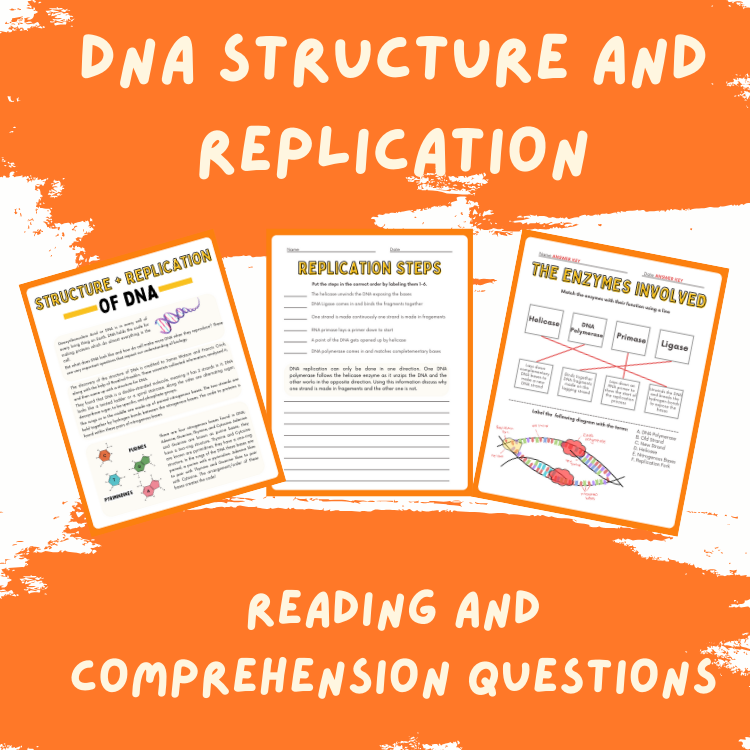
If you’re looking for some science reading resources to help your students out, feel free to check out my Teachers Pay Teachers page. I’ve got some great reading materials that can support your students’ learning and development!