It’s the middle of August, and that feeling is creeping in
—you’re dreading it. Yep, it’s time to start planning for another school year. The toughest part? Figuring out what to do during that very first week. You don’t want to spend all your time on “silly” icebreakers, but you’re not ready to dive straight into heavy content either. So how do you kick off the year in a way that’s fun, meaningful, and helps build a positive classroom culture—while also setting the stage for real learning? Here are some ideas I’ve tried (and that have worked!) to start the year strong in a high school science classroom.
1. Building Relationships with Purpose: Go Beyond the “Get to Know You” Questions
First and foremost, the most important thing to focus on during those first few days is building relationships with your students. A lot of people will say, “Get your expectations out, go over classroom management, build routines”—and yes, those things matter. But here’s the truth: none of that will stick unless you first create strong connections. The more time you spend building relationships—both between you and your students and among the students themselves—the smoother the rest of your year will go.
Now, traditional icebreakers work, but let’s be honest: they’re a little too cookie-cutter. “How was your summer?” “What’s your favorite color?” Cue the eye rolls. Students get tired of the same activities in every class. Instead, I like to mix it up with a couple of fun options.
One of my favorites is This or That. Everyone stands in the middle, I give them two choices (pancakes or waffles, Coke or Pepsi, cats or dogs—you get the idea), and they move to the side of the room that matches their answer. The fun part is asking why. Suddenly, they’re debating waffles versus pancakes like it’s a life-or-death issue, and it’s hilarious. I have a ready-to-use This or That resource in my TPT store that makes this activity super easy to implement.
Another activity I love is How Well Do You Know Your Teacher? I set up a Kahoot all about me—students take their best guesses, and it always leads to funny conversations. Bonus: you can play it again at the end of the year to see how much they’ve learned about you.
I also make a point to learn about them—especially how they like to learn. You can do this in a lot of ways: sticky note responses, a quick survey, or even big sheets of paper around the room with questions for students to answer honestly. If you want a ready-to-go option, I have a Student Survey resource that works great as an introductory tool and really helps you get to know your students.
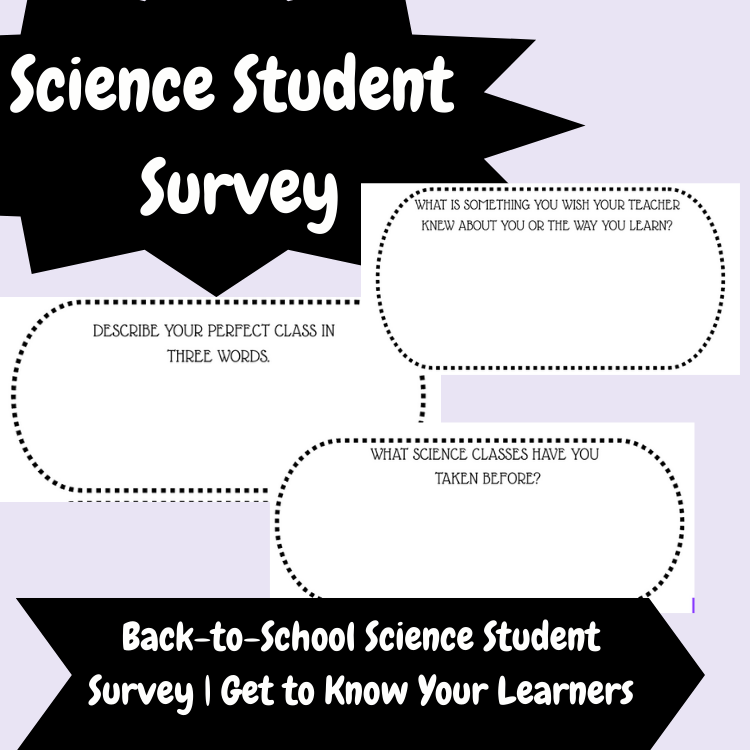
👉 Both the This or That game and the Student Survey are also included in my First Week of School Bundle, so you can grab them all at once!
2. Skills + Science Practices: Pre-Assess, Don’t Guess
Next comes the pre-assessment phase. In science, it can be tough to pre-assess content knowledge—especially when students are transitioning from Earth science to biology or chemistry. Their background knowledge is usually spotty (if it’s there at all), so I don’t waste time testing what they may or may not already know. Instead, I focus on assessing their skills.
The NGSS standards emphasize Science and Engineering Practices (SEPs), and I’ve found it incredibly helpful to see where students are with those skills right from the start. That way, I know what to build on throughout the year. I keep checking in on these skills as we go, but laying the foundation early is key.
This is also the perfect time to cover lab safety and lab equipment. I use a beginning-of-the-year stations activity with 10 different stations. It lets me assess every SEP and lab safety skills while keeping things interactive and engaging. The stations are short and hands-on—students are up, moving, and participating, rather than sitting through something monotonous.
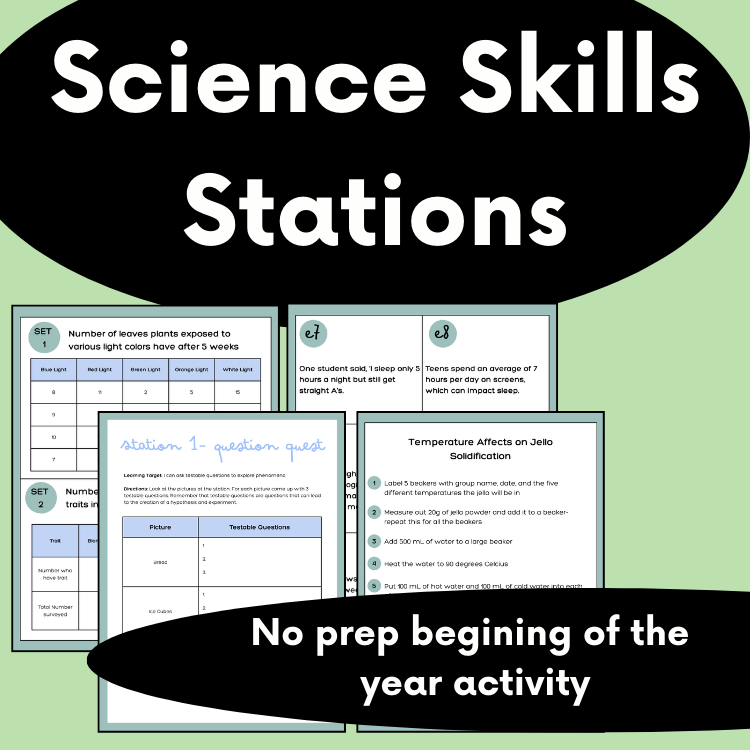
👉 If you’d like to try this with your students, my Science Skills Station Activity is available in my TPT store—and it’s also included in the First Week of School Bundle along with other back-to-school activities..
3. The Syllabus: Less Lecture, More Launchpad
Of course, you’ll also need to go over your syllabus—it’s just part of the deal. But instead of making it a boring read-and-forget document, try to make it fun and intentional. I know that can be tricky, but there are definitely ways to do it!
One option is to turn it into a scavenger hunt. Students read through the syllabus to find specific details, and those answers can reveal a hidden message or even lead to a small prize. It takes a little prep to set up, but it’s a super engaging way to get students actually reading the document. If you don’t want to spend the time creating one from scratch, I have a ready-to-use Syllabus Scavenger Hunt in my TPT store that makes this activity easy to implement!
Another idea is to have groups take different sections of the syllabus, read them, and then share the most important highlights with the class. This way, students are the ones pointing out what matters, and they’re more likely to remember it.
The key is to make sure the syllabus isn’t just another paper that gets shoved in a backpack and never looked at again. It should set the tone for what the course will be like, reflect the classroom culture you’re aiming for, and provide transparency about expectations. This is also a good time to talk through behavioral expectations, but in a way that feels collaborative and connected to your classroom community.
👉 Want to save yourself time? Check out my First Week of School Bundle on TPT—it includes my syllabus scavenger hunt, classroom surveys, icebreakers, and more activities to help you kick off the year with confidence.
4. Lab Safety: Set the Tone Early (and Memorably)
I know I already mentioned this in my skills stations, but it’s worth saying again: lab safety cannot be emphasized enough—especially in high school science. Whether it’s chemistry, biology, or Earth science, students are working with chemicals, equipment, and lab environments that require responsibility. Setting the tone early is crucial, and it’s something we should come back to often.
Of course, lab safety doesn’t have to be boring! There are lots of ways to make it engaging. Have students design safety posters to decorate your classroom, create quick safety videos, or even turn the rules into an escape room challenge. You could also give them safety quizzes or practice scenarios to think through what the rules look like in action. The more interactive it is, the more likely they’ll actually remember the expectations.
I also recommend giving students actual lab procedures to read early on. Many of them don’t really understand what safety precautions mean until they see it in context. For example: if a procedure mentions a certain chemical, what does that mean for wearing goggles, gloves, or how to properly dispose of waste? These are things many high schoolers don’t know until we walk them through it—and it’s so important to build that awareness right from the start.
👉 If you’d like a structured way to cover both lab safety and science skills, my Science Skills Station Activity includes built-in safety checks and equipment practice. And if you want everything ready to go for the first week, my First Week of School Bundle has it included—along with icebreakers, surveys, syllabus activities, and more!
with confidence.
5. Wrapping It All Together: First Week with Intention
So, to sum it up: the first week of school is all about building rapport and relationships, pre-assessing skills, going over your syllabus and expectations, and teaching lab safety. These things set the tone for your classroom culture and create the habits that will carry you (and your students) through the rest of the year.
The key is to do it with fun and genuine excitement. Smile, interact with your students, and show them you’re glad they’re there. If you’re not connecting with them, it’s much harder to teach them. Remember—teaching isn’t about perfection, it’s about progress. Small steps make a big difference. Try something new this year, or even in the middle of the year—because classroom culture is something we keep building all year long.
👉 If you’d like ready-to-go activities to help with all of this, check out my First Week Science Bundle in my TPT store. It includes my This or That game, Student Survey, Skills Stations, and Syllabus Scavenger Hunt—everything you need to start the year with strong relationships, clear expectations, and a positive classroom culture. with confidence.
I’ve started school years by only going over the syllabus and expectations, and honestly—it didn’t work. I’ve also started with just fun games, and while it was enjoyable, we didn’t get anywhere. What I’ve learned is that the best approach is a blend. Don’t dive straight into content, but also don’t make the first week all fun and games. Balance is key: build relationships, set expectations, create routines, and sprinkle in engaging activities. That’s why each step in this process matters.
Most importantly, begin the year with excitement and intention. When you’re genuinely enthusiastic and purposeful, you’ll set the stage for an amazing classroom culture and a year full of meaningful learning.
👉 If you’re looking for ready-made activities to help you get started, check out my First Week Science Bundle on TPT. It’s packed with resources like my This or That game, Student Survey, Skills Stations, and Syllabus Scavenger Hunt—everything you need to start the year smoothly while building strong connections with your students.